TRUE REST FLOAT SPA
The Science Behind Float Therapy: Research on Flotation-REST Benefits
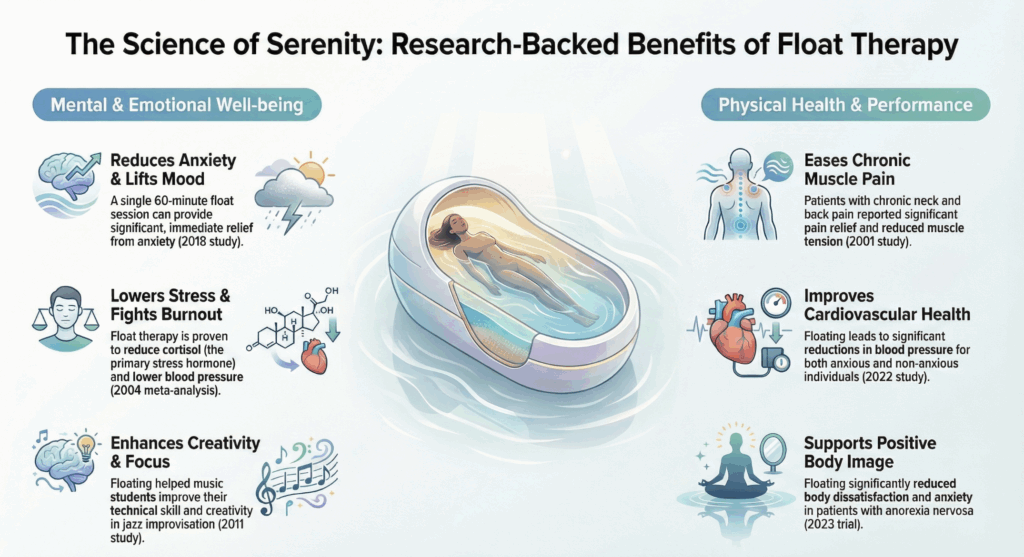
Float therapy research explores how Flotation-REST (Restricted Environmental Stimulation Therapy) affects stress, anxiety, pain, and overall mental well-being. While floating is often described as deeply relaxing, scientific research helps explain what happens inside the body and brain during a float session.
Below is an overview of how float therapy works, followed by key research studies that examine its benefits across mental, physical, and emotional health.
A Brief Overview of Float Therapy
Float therapy takes place in a light-controlled, sound-reduced float pod or room designed to minimize external stimulation.
Inside the pod is approximately 10–12 inches of warm water containing over 1,000 pounds of dissolved Epsom salt (magnesium sulfate). This high salt concentration creates natural buoyancy, allowing the body to float effortlessly on the surface of the water.
Both the air and water are heated to skin temperature, typically around 93–94°F. When external stimulation is reduced and temperature differences disappear, the nervous system can shift into a deeply relaxed state.
As the body fully relaxes, many people experience a fading sense of physical boundaries and time awareness. Recent research suggests this phenomenon, sometimes referred to as “body boundary dissolution,” plays a direct role in reducing anxiety, burnout, and depressive symptoms.
Modern float therapy research continues to examine how reduced sensory input influences the nervous system, emotional regulation, and physical recovery.
Anxiety and Depression
Examining the Short-Term Anxiolytic and Antidepressant Effect of Floatation-REST
Published: February 2018
This study examined 50 participants experiencing anxiety and depression who completed a single 60-minute float session. Participants completed assessments before and after floating.
Researchers observed a significant reduction in state anxiety along with notable improvements in mood across all participants. The findings suggest that even one float session may provide measurable relief from anxiety and depressive symptoms.
The following sections highlight key findings from float therapy research across mental health, stress reduction, and physical recovery.
Stress and Burnout
Flotation Restricted Environmental Stimulation Therapy (REST) as a Stress-Management Tool: A Meta-Analysis
Published: March 2004
This meta-analysis reviewed 27 separate studies involving 449 participants. Across the studies, float therapy was associated with reduced cortisol levels and lower blood pressure.
Lower cortisol, the body’s primary stress hormone, is linked to improved emotional regulation, reduced burnout, and enhanced overall well-being. The results support float therapy as an effective stress-management tool.
Deep Relaxation and Altered States of Consciousness
The Induction of Altered States of Consciousness During Flotation REST Is Associated With the Dissolution of Body Boundaries and the Distortion of Subjective Time
Published: April 2024
This study explored how float therapy affects perception, awareness, and relaxation. Researchers found that participants often lost awareness of time and physical boundaries while floating.
These altered states were strongly associated with deeper relaxation and reduced anxiety, helping explain the neurological mechanisms behind float therapy’s calming effects.
Blood Pressure and Cardiovascular Health
Exploring the Acute Cardiovascular Effects of Floatation-REST
Published: December 2022
This study included both clinically anxious individuals and non-anxious participants. Researchers observed significant reductions in blood pressure following float sessions across both groups.
Lower blood pressure and cardiovascular strain contribute to feelings of calm and physical relaxation, reinforcing float therapy’s potential benefits for heart and nervous system health.
Body Image and Anorexia Nervosa
The Impact of Floatation Therapy on Body Image and Anxiety in Anorexia Nervosa: A Randomized Clinical Efficacy Trial
Published: August 2023
This clinical trial involved 68 participants diagnosed with anorexia nervosa. The treatment group floated for 60 minutes twice per week over an eight-week period.
Participants in the float group experienced significant reductions in body dissatisfaction and anxiety, with positive effects still present six months after treatment ended.
Chronic Muscle Pain
Effects of Flotation-REST on Muscle Tension Pain
Published: May 2001
This study followed 37 individuals suffering from chronic neck and back muscle pain. Over three weeks, participants floated multiple times.
Those who floated reported significant pain relief, reduced muscle tension, and improved sleep onset compared to the control group.
Perceptual-Motor Skills and Creativity
The Effect of the Flotation Version of Restricted Environmental Stimulation Technique (REST) on Jazz Improvisation
Published: 2011
In this small study, music students who participated in regular float sessions demonstrated improved technical skill and creativity compared to students who did not float.
While limited in size, the study supports the idea that float therapy may enhance creativity, focus, and performance by reducing mental noise and stress.
Pain, Athletic Performance, and Mental Well-Being
A Systematic Review of Flotation-Restricted Environmental Stimulation Therapy (REST)
Published: April 2024
This comprehensive review analyzed data from 60 studies involving 1,838 participants. Systematic reviews are considered one of the strongest forms of scientific evidence.
Researchers concluded that float therapy consistently produced positive effects on pain, stress, athletic performance, mental well-being, and clinical anxiety. Limited or no effects were found for sleep disorders and smoking cessation.
Experience the Benefits of Float Therapy for Yourself
The findings from float therapy research suggest floating may support relaxation and well-being for many individuals.
Scientific research continues to show how float therapy supports stress reduction, anxiety relief, physical relaxation, and overall mental well-being. By reducing sensory input and allowing the nervous system to fully rest, floating creates an environment where the body and mind can reset in ways that are difficult to achieve in everyday life.
If you’re curious how the benefits discussed in this research might support your own well-being, the most effective way to understand float therapy is to experience it firsthand.
Book a float therapy session at a True REST location near you and discover how floating can help you relax more deeply, think more clearly, and feel more balanced.