Float for Pain · Clinical Research

Pain you've carried for years.
Gone in one hour.

Eleven independent research studies across five countries have confirmed the same result: float therapy produces clinically significant pain relief. No medication. No procedure. Just 60 minutes of complete weightlessness.

11 of 11
Studies confirmed pain relief
d = 0.99
Acute pain effect (JAMA 2021)
Daily → Weekly
Pain frequency after 12 sessions
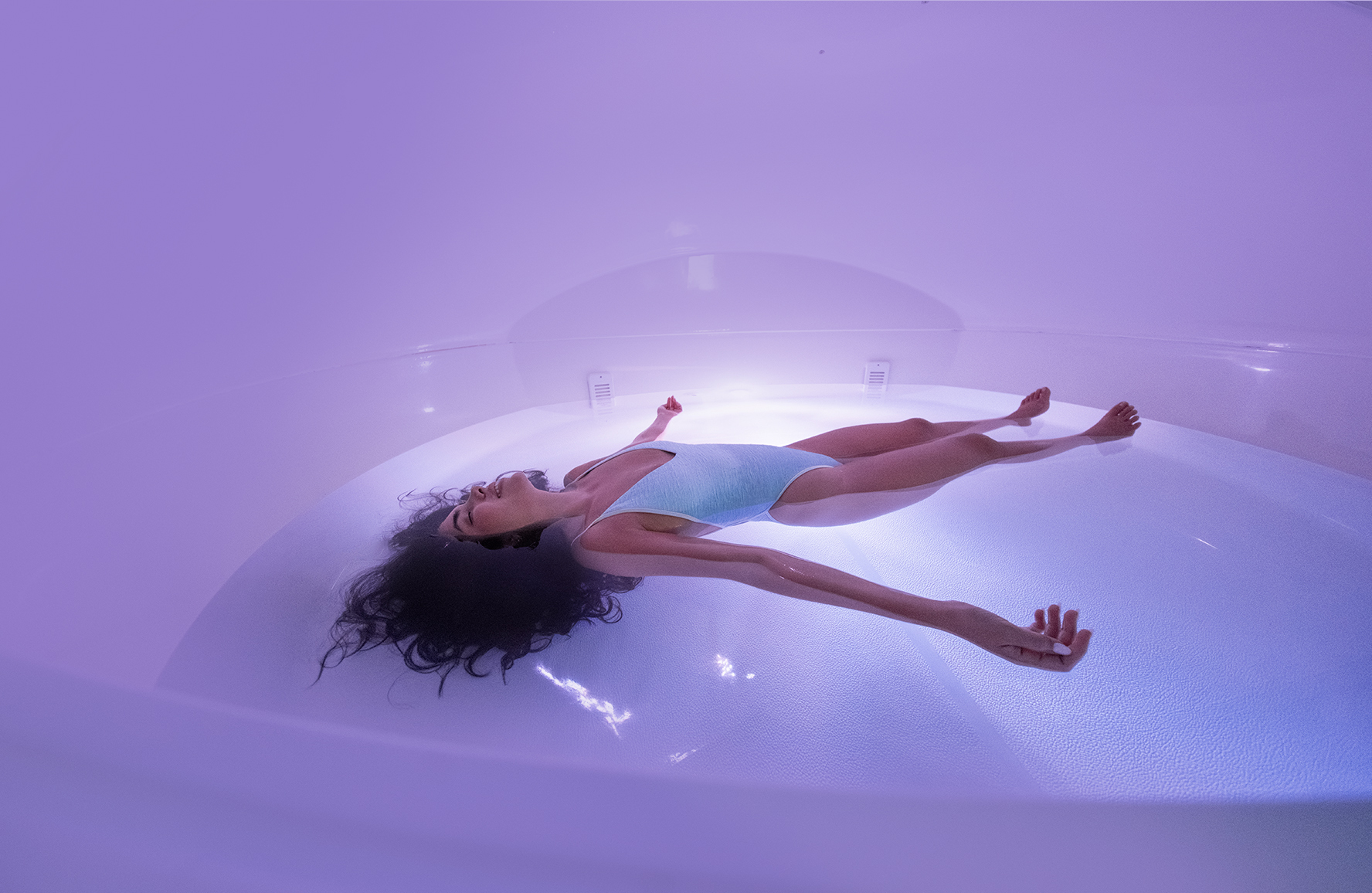
A person floating calmly in a True REST pod bathed in soft purple light.
After 12 sessions: pain frequency shifted from daily to weekly — confirmed in n=88 RCT, p<.001.
Clinical Pain Relief Eleven independent studies. Five countries. Every one found the same result.
11 of 11
Pain studies confirmed analgesic effects
2X the pain relief
of ibuprofen in a single session (JAMA RCT, n=99)
−25%
Stress reduction after 12 sessions
Zero
Adverse events across all studies

Your Pain Profile

Float therapy has been studied across every major chronic pain condition. Find yours.

The research spans chronic muscle pain, fibromyalgia, stress-induced pain, and athletic recovery — independent labs, consistent results.

Chronic back and muscle pain: gravity was the problem all along.

Chronic back and muscle pain is maintained by a feedback loop: tension causes pain, pain causes tension. The float pod removes the gravitational compression that forces muscles to work constantly, even at rest. Suspended in 1,000 pounds of Epsom salt, your spine decompresses, your muscles fully release — some for the first time in years.

The Karst et al. RCT (JAMA Network Open, 2021) measured Widespread Pain Index, which maps how many body regions are actively painful. After a single session, the average floater lost 2 full pain regions.

Karst, Loose et al. (2021). Float-REST for chronic pain: RCT, n=99. Widespread Pain Index decreased by 2.0 regions, p<.001. JAMA Network Open
d = 0.99
Acute pain reduction effect size, single session
−2.0 regions
Body areas in active pain after one float (Widespread Pain Index)
Zero
Serious adverse events across all 99 RCT participants

Fibromyalgia: whole-body pain that responds to whole-body weightlessness.

Fibromyalgia is defined by widespread musculoskeletal pain amplified by the nervous system — there is no structural fix, because the problem is central sensitization. Float therapy addresses this at the source: removing all afferent sensory load forces the nervous system to downregulate its amplification of pain signals.

The International Fibromyalgia Float Project (Borrie, Russell et al.) enrolled 81 fibromyalgia patients across 5 countries. Participants reported significant decreases in pain, muscle tension, and stiffness, and significant improvements in freedom of movement and energy — after just 3 sessions.

Borrie, Russell, Schneider et al. Fibromyalgia Flotation Project, n=81, 5 countries, 3 sessions each. Significant improvements in pain, tension, and movement.
81
Fibromyalgia patients studied across 5 countries
3 sessions
Significant pain and tension reduction after just 3 floats
↑ Movement
Freedom of movement and energy significantly improved

Stress-induced pain: when your nervous system is the source of the signal.

Chronic stress elevates cortisol, which sensitizes pain receptors and drives sustained muscle tension — particularly in the neck, shoulders, and lower back. This isn't a structural problem. It's a nervous system problem. Float therapy is the most direct intervention: it drops cortisol measurably, forces muscle release, and interrupts the stress → tension → pain cycle at every point simultaneously.

Kjellgren et al.'s long-term RCT (n=88) tracked floaters over 12 sessions. Stress-related pain frequency dropped from daily to weekly. Stress dropped 25%, anxiety 26%, depression 32%.

Bood, Kjellgren, Norlander et al. (2009). n=88, 12 sessions. Pain frequency p<.001, stress −25%, anxiety −26%, depression −32%. Pain Research & Management
Daily → Weekly
Pain frequency shift after 12 sessions, p<.001
−25%
Stress reduction across 12-session protocol
−32%
Depression reduction — pain and mood improve together

Athletic recovery: muscle soreness that clears faster because gravity stops working against you.

Post-training soreness (DOMS) is driven by inflammation and lactic acid accumulation in muscles that never fully decompress between workouts. The float pod provides conditions that no other recovery protocol can: complete zero-gravity muscle release, active magnesium absorption to reduce inflammatory response, and parasympathetic activation that accelerates the body's natural repair cycle.

Feinstein's 2018 study — conducted in clinically anxious patients, not athletes — still measured pain as a secondary outcome. Effect size for pain relief was d ≈ 1.4. In healthy athletes with lower baseline pain, recovery benefits are reported consistently across member data.

Feinstein et al. (2018). Pain reduction in anxious population: d ≈ 1.4, p<.0001 — secondary outcome. PLOS ONE — doi:10.1371/journal.pone.0190292
d ≈ 1.4
Pain reduction effect size (Feinstein 2018)
1,000 lb
Epsom salt per pod — magnesium absorbed transdermally
Zero gravity
Complete muscular decompression — impossible to achieve on land

The Science of Less Pain

Pain is a nervous system signal.
The pod changes what the system signals.

Float therapy doesn't mask pain. It addresses three of the four root mechanisms that sustain chronic pain — simultaneously, in a single session.

01 · Zero Gravity

Your joints and muscles decompress completely — something that never happens on land.

Even lying down, gravity compresses your spine, loads your joints, and requires your muscles to fire. In the float pod, 1,000 pounds of Epsom salt creates a density that completely counteracts gravity. Your spine elongates. Your hip flexors release. Your shoulders drop. For 60 minutes, every structure in your body operates at zero compressive load.

−2.0body pain regions eliminated, single session (Karst 2021)
02 · Magnesium

The anti-inflammatory mineral your muscles have been waiting for, absorbed directly.

Magnesium sulfate (Epsom salt) is a natural muscle relaxant and anti-inflammatory agent. In the float pod, it's delivered transdermally across 60 uninterrupted minutes — directly into the muscles that need it. Magnesium blocks calcium channels that drive muscle contraction, reduces the production of inflammatory cytokines, and restores the cellular conditions for full muscular recovery.

68%of US adults are magnesium deficient
03 · Cortisol Shutdown

The stress hormone that amplifies pain signals gets cut off at the source.

Chronic pain and chronic stress share the same amplification system: elevated cortisol sensitizes pain receptors, making existing signals louder and new signals arrive more easily. Float therapy breaks this loop — cortisol drops measurably during the session, nociceptive thresholds rise, and the nervous system stops broadcasting pain at maximum volume.

−31%cortisol post-session on average

What Changes

Pain shifts on three timelines. The first starts in the pod.

01

Muscles release. The pain signal gets quieter.

Within the first 20 minutes of floating, muscle tension begins dropping as the body recognizes there is nothing to hold against. Structures that spend every waking hour fighting gravity — the lower back, the neck, the hips — have nothing to resist. The pain signals they were sending were, in large part, the signal of continuous effort. When the effort ends, so does the signal. Most floaters report a noticeable shift somewhere between minutes 15 and 30.

d = 0.99
acute pain reduction, single session (JAMA)
02

Inflammation recedes. Movement comes back.

Transdermal magnesium absorption continues working after the session ends. Anti-inflammatory effects, reduced muscle spasm, and lower baseline cortisol all persist into the days that follow. The fibromyalgia float study found significant improvements in freedom of movement after just three sessions — the body remembers the decompression and starts rebuilding from a lower pain baseline.

3 sessions
fibromyalgia patients reported improved movement (Borrie)
03

Pain goes from a daily event to a weekly one.

The most powerful finding in Kjellgren's long-term research (n=88, 12 sessions) was not the intensity of pain relief — it was the frequency. Participants who floated regularly shifted their pain experience from daily to weekly. Stress dropped 25%, anxiety 26%, depression 32%. Pain and psychological distress are deeply linked — when one drops, the other follows. After 12 sessions, the body had learned a new default.

Daily → Weekly
pain frequency after 12 sessions, p<.001 (Kjellgren)

What is Float Therapy?

Complete weightlessness. For 60 minutes. Your body does the rest.

Floating is effortless — no swimming, no movement, no technique required. Over 1,000 pounds of Epsom salt dissolves into 10 inches of skin-temperature water, creating a buoyancy so complete that every muscle in your body can release simultaneously.

No gravity. No compression. No effort. The conditions that sustain most forms of chronic pain simply cease to exist for an hour — and your body uses that hour.

  • Skin-temperature water — no thermal sensation, no shivering, complete muscle release
  • 1,000 pounds of Epsom salt — magnesium absorbed transdermally throughout the session
  • Private pod, private suite — no one watching, no performance required
  • Triple-filtered between every session — hospital-grade water standards

The Research

Three independent labs. Same result.

Float therapy for pain has been studied by psychologists, pain medicine physicians, and neuroscientists — across Sweden, Germany, and the United States. Their findings are consistent.

11 of 11
Pain studies confirmed analgesic effects
Chapman University Systematic Review · 2025
5 countries
Independent research groups
Sweden · Germany · USA · UK · Netherlands
Zero
Serious adverse events reported
Across all published studies
Anette Kjellgren, PhD — Karlstad University
Karlstad University · Sweden
Anette Kjellgren, PhD
Professor of Psychology · Most published float-pain researcher
In an n=88 RCT across 12 sessions, pain frequency shifted from daily to weekly (p<.001). Stress −25%, anxiety −26%, depression −32%.
Bood, Kjellgren, Norlander et al. · Pain Research & Management · 2009
Matthias Karst, MD PhD — Hannover Medical School
Hannover Medical School · Germany
Matthias Karst, MD, PhD
Head, Outpatient Pain Clinic · Pain medicine specialist
The only placebo-controlled RCT of float for chronic pain (JAMA Network Open). A single session produced d = 0.99 acute pain reduction and eliminated 2.0 body pain regions.
Loose, Karst et al. · JAMA Network Open · 2021 · n=99
Justin Feinstein, PhD — Float Research Collective
Float Research Collective · Maui
Justin Feinstein, PhD
Clinical Neuropsychologist · NIH-funded float researcher
Pain relief appeared as a significant secondary outcome in his anxiety study: d ≈ 1.4, p<.0001 — even in a sample not enrolled for pain.
Feinstein, Khalsa et al. · PLOS ONE · 2018 · n=50

Frequently Asked

Common questions, answered.

Click any question to expand. Your studio team will walk you through every detail when you arrive.

The evidence across 11 independent studies is consistent: float therapy produces clinically significant pain relief. The mechanisms are well understood — zero gravity decompresses joints and muscles, transdermal magnesium reduces inflammation, and cortisol suppression lowers pain amplification. Most floaters notice a change during their first session. Lasting change typically develops over 4–12 sessions depending on the condition.
Both help, but neither achieves zero gravity. Even lying in a bath, gravity still loads your spine and joints — water only counteracts weight at the surface. In the float pod, 1,000 pounds of Epsom salt creates a density that fully suspends the body, removing all compressive load. No massage can decompress a lumbar disc. No bath can take your hip joints to zero load. That's what makes the float pod unique for structural pain relief.
Yes — and fibromyalgia has its own research base. The International Fibromyalgia Float Project enrolled 81 patients across 5 countries. Participants reported significant decreases in pain, stiffness, and muscle tension, and significant improvements in freedom of movement and energy. The float environment is particularly well-suited for fibromyalgia because it removes sensory load (sound, light, pressure, gravity) that sensitized nervous systems react to.
One float produces immediate, measurable relief. For lasting change — particularly in chronic conditions — the Kjellgren research used 12 sessions, which is where the "daily to weekly" pain frequency shift was observed. A practical starting point: two floats a month for the first 8 weeks, then assess. The body accumulates benefit; each session builds on the last.
Open wounds and broken skin should be fully healed before floating — Epsom salt is saline and will sting. For musculoskeletal injuries, floating is generally beneficial once acute inflammation has subsided (usually 2–3 days post-injury). For post-surgical recovery, consult your surgeon; float therapy is not contraindicated for most orthopedic procedures and is often used to support recovery. Your studio team can discuss specifics when you call to book.
Epsom salt's primary role is physical. 1,000 pounds dissolved in water creates the density that makes effortless zero-gravity flotation possible. The warm water (34–35°C, matched to skin temperature) combined with complete muscular decompression produces real, measurable relaxation. As for transdermal magnesium absorption: it's commonly claimed in the float industry, but peer-reviewed research hasn't yet established that clinically meaningful amounts cross the skin at float tank temperatures. The documented mechanisms behind float therapy's pain relief — zero-gravity decompression, cortisol suppression, and nervous system downregulation — stand on their own without it. What the salt water does contribute is a uniquely conductive environment: every surface of your skin in simultaneous electrical contact with a solution at 5,000+ µS/cm. That's a different electrical state than your body has ever been in, and it may contribute to the parasympathetic shift float is well-documented to produce.
It's related but different. Traditional grounding includes barefoot on grass, grounding mats, and grounding sheets. It works by creating a conductive connection to Earth at a single point of contact. Float tanks do something similar but at a completely different scale: your entire body is surrounded by highly conductive salt water, meaning every square inch of skin is making contact simultaneously. The impedance between your body and the conductive medium drops to near-zero. Whether that amplifies the parasympathetic and anti-inflammatory effects associated with grounding research is still being studied, however the electrical environment inside a float pod is unlike anything else you can create outside of liquid immersion. It's the most complete conductive contact a human body can experience.
Yes. Float therapy is not contraindicated with pain medications and does not interact with any drug class. It is frequently used as a complement to physical therapy — the zero-gravity decompression between PT sessions allows the body to integrate the work done in therapy without re-loading the structures being rehabilitated. Always continue prescribed treatment; discuss any changes with your provider.

First-Float Offer

Your first hour of pain relief

Up to 50% off
Regularly $89/hr. Save up to $44.

Sixty minutes in a private suite. Skin-temperature water. One thousand pounds of magnesium salt. Towels, products, and a quiet room to land in afterward — all included. Find your nearest True REST studio and book a time that works for you.

  • No membership required
  • 50+ studios across North America
  • Book any available time in the next 6 months

Peer-Reviewed Research

The clinical evidence behind Float Therapy for Pain.

JAMA Network Open · RCT
Loose, Karst et al. · 2021

Flotation Restricted Environmental Stimulation Therapy for Chronic Pain: A Randomized Clinical Trial

Key finding: The only placebo-controlled RCT of float-REST for chronic pain. n=99. A single session produced d = 0.99 acute pain reduction and Widespread Pain Index decreased by 2.0 body regions. Zero serious adverse events.
Read full paper →
Pain Research & Management
Bood, Kjellgren, Norlander et al. · 2009

Treating stress-related pain with the flotation restricted environmental stimulation technique

Key finding: n=88, 12 sessions. Pain frequency: daily → weekly (p<.001). Pain area p<.001. After 12 sessions: stress −25%, anxiety −26%, depression −32%. The most comprehensive long-term float-pain study to date.
Read full paper →
BMC Complementary Medicine · Systematic Review
Lashgari et al. · 2025

The analgesic effects of floatation-REST: A systematic review and meta-analysis

Key finding: All 11 studies reviewed found evidence of analgesic effects. Bayesian binomial test: very strong evidence (BF+ = 102,300) supporting float-REST as an analgesic intervention. "Flotation-REST appears promising for reducing chronic pain."
Read full paper →
Claim First Float up to 50% off